Standardised Heat Pump Solutions for Sustainable Food Production
The EXQUISHEAT project supports the goals of the EU Green Deal, the Fit for 55 package, and the Net-Zero Industry Act by promoting the large-scale deployment of high-efficiency industrial heat pumps in the European food and beverage industry.
Watch the video and discover EXQUISHEAT:
A quick introduction to how EXQUISHEAT is helping accelerate the uptake of industrial heat pumps in the food & beverage sector.
Why Industrial Heat Pumps are key to greening Europe’s food production
Europe’s food industry plays a central role in the continent’s economy — with over 271,000 companies and more than 4 million employees — but it also faces growing challenges in meeting climate targets. High energy prices, reliance on fossil fuels, and increasing decarbonisation requirements make the transition to cleaner, more efficient technologies an urgent priority.
Industrial heat pumps offer a powerful solution.
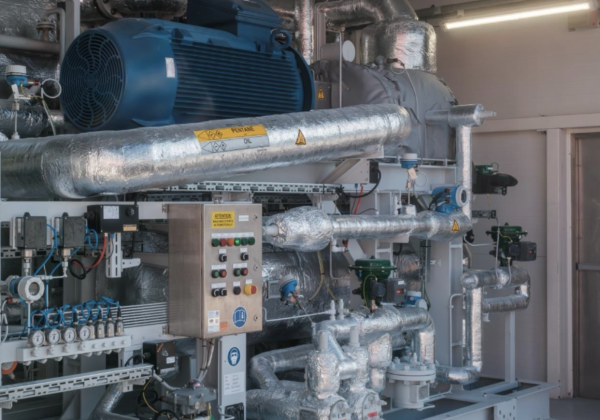
By electrifying heat generation and reusing waste heat from industrial processes, they can drastically reduce greenhouse gas emissions and energy consumption. Unlike fossil-fuel boilers, which typically achieve an efficiency of up to 95%, industrial heat pumps can reach coefficients of performance (COP) above 6, providing both heat and cooling for a range of applications — from pasteurisation and drying to cleaning and refrigeration.
Despite their potential, the adoption of industrial heat pumps across Europe remains limited. Barriers such as lack of awareness, uncertainty about integration into existing systems, and financial concerns continue to slow their uptake. Yet, the food and beverage sector is particularly well-suited for their implementation, as most of its process temperatures fall within the operational range of modern high-temperature heat pumps (up to 200°C).
Good practices and exemples
- News
Around 270 kW of excess heat recovered from refrigeration, with no interruption to production during installation: Sweden’s Grilstad meat factory shows how food producers can make better use of their energy. This was one of two practical examples presented at EHPA’s Heat BIG webinar with the EXQUISHEAT EU project on 30 September, exploring industrial heat pumps in […]
- News
The second edition of the EXQUISHEAT newsletter is now available, bringing together the latest project news, activities and opportunities to get involved. Over the past months, EXQUISHEAT partners have continued working to accelerate the uptake of industrial heat pumps in the food and beverage sector, combining technical developments with direct engagement with industry. In this […]
- News
The EXQUISHEAT project was presented at the 18th International Conference on Sustainable Energy & Environmental Protection (SEEP), contributing to discussions on the role of industrial heat pumps in accelerating the decarbonisation of European industry. Held in Rome, the conference brought together researchers, industry representatives and policymakers to exchange knowledge on the latest developments in sustainable […]
How EXQUISHEAT will accelerating the transition
The EXQUISHEAT project supports the goals of the EU Green Deal, the Fit for 55 package, and the Net-Zero Industry Act by promoting the large-scale deployment of high-efficiency industrial heat pumps in the European food industry. Through process analysis, technology standardisation, and the creation of a collaborative roundtable between food manufacturers and technology providers, the project will help overcome current market barriers and drive innovation.
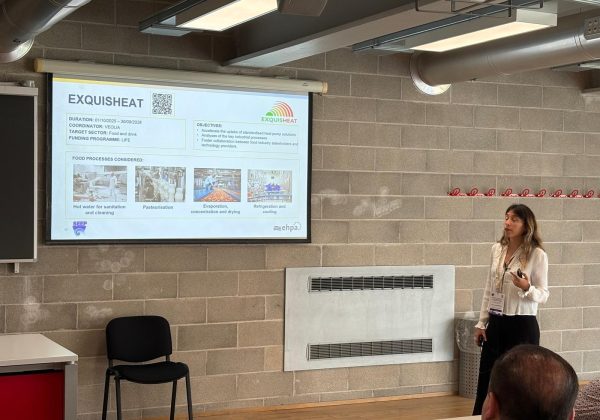
By developing practical, standardised solutions for key processes — such as sanitation, pasteurisation, evaporation, drying, and cooling — EXQUISHEAT aims to make heat pump integration easier and more cost-effective for companies of all sizes. Over the long term, the project will facilitate the installation of at least 20 new heat pump systems, leading to energy savings of 28 GWh per year and reducing emissions by 36 tCO₂-eq annually.
Overview information
Period:
Started: October 1st 2025
Ended: September 30th 2028